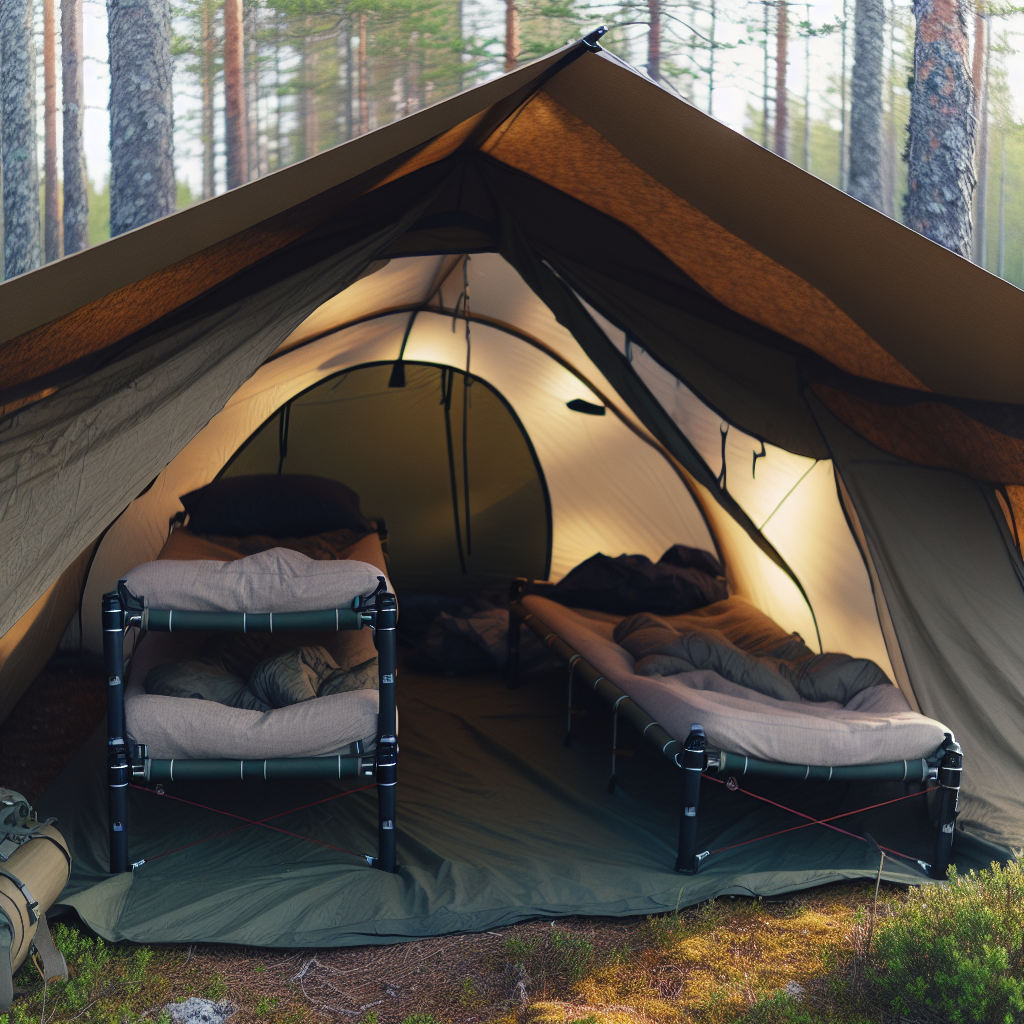
A camping bunk bed is a game-changer for trail-goers who need to maximize space and comfort. Whether you’re bunking up in an eight-person tent at Glacier National Park or setting up a multi-family basecamp along the Appalachian Trail near Damascus, Virginia, this gear essential makes sleeping arrangements more efficient. Designed for families, scout troops, and group hikers, today’s top camping bunk beds are built to optimize tent space while providing durable, elevated rest—perfect for rugged terrain and tight sleeping quarters.
Why a Camping Bunk Bed Is a Smart Trail Companion
Stacking sleeping quarters with a camping bunk bed isn’t just smart—it’s essential for group comfort on the trail. Whether you’re camping with kids or rotating through a shared basecamp, bunk beds save valuable floor space. In even the roomiest 6- or 8-person tents, these beds make room for bags, gear, and easy movement without sacrificing sleep quality.
Modern camping bunk beds are modular, compact, and engineered for outdoor use. Designed to break down easily into duffels or carry bags, they can be assembled in under 10 minutes—even at dusk. Many models convert into single cots for flexible setups, ideal for open-air sleeping from Yosemite’s Tuolumne Meadows to Colorado Trail’s Twin Lakes segment.
Families hiking through Mount Rainier’s Carbon River or Maine’s Bigelow Preserve will especially appreciate the order bunk beds bring to chaotic tents. With steel or aluminum frames, they often support full-grown adults—providing stability even on damp, uneven ground. Elevated sleep also means fewer bug encounters and dry sleeping surfaces during soggy campouts.
Must-Have Features in a Quality Camping Bunk Bed
Not all camping bunk beds are created equal. To narrow down your search, focus on rugged construction, ease of assembly, and smart packability. When evaluating options, consider the key features below:
- Weight and pack size: Ideal models weigh under 30 pounds and pack small—perfect for short backcountry treks or car-supported adventures.
- Simplified setup: Choose tool-free systems with color-coded pieces and intuitive locks. Quick assembly is critical when daylight fades fast on trails like Utah’s Coyote Gulch or Oregon’s Timberline Trail.
- Durability and weight capacity: Look for aircraft-grade aluminum or steel frames. Confirm weight limits—especially for adult users or stacked setups.
- Multi-functionality: Some setups become benches or convert into two singles, maximizing use during layovers or rest stops like Pictured Rocks National Lakeshore.
- Tent compatibility: Know your tent’s peak height. A 60-inch bunk bed won’t fit a 48-inch bivy dome, so layout and vertical space matter.
If you’re hauling gear into roadside campsites near Grand Canyon’s Bright Angel trailhead, heavier beds are a fine trade-off. But for remote journeys, such as trekking into Buffalo River, Arkansas, go lightweight with modular designs that handle rugged trails and unpredictable terrain.
Top Picks: Best Camping Bunk Beds for Trail Comfort
We tested several camping bunk beds across diverse terrains—from Sierra Nevada’s ridges to Vermont’s Long Trail. These three models stood out for their comfort, stability, and convenience in real-world conditions.
Disc-O-Bed Large Cam-O-Bunk
Best Overall for Versatility and Comfort
- Weight: 63 lbs (with bags and organizers)
- Dimensions: 79” L x 36” W x 28” H
- Capacity: 500 lbs per cot
The Cam-O-Bunk is our top pick for full-sized users or group camping. Its heavy-duty steel frame holds up well on rocky, uneven terrain—proven during our testing at North Carolina’s Art Loeb Trail. Setup takes less than 10 minutes with two people, and both bunks easily convert into single cots or benches.
Side organizers store essentials like lights or water bottles, eliminating late-night fumbling. This system fits neatly into your trunk via two padded zip duffels, great for basecamps like Newhalem Creek in North Cascades National Park.
Kid-O-Bunk by Disc-O-Bed
Best for Young Adventurers
- Weight: 36 lbs
- Dimensions: 65” L x 27” W x 32” H
- Capacity: 200 lbs per cot
The Kid-O-Bunk was built with young campers in mind. We tried it along Montana’s Lake McDonald trail, where it survived cold, messes, and plenty of playful wear-and-tear. Its compact size fits well in family tents under 6 feet tall.
Rounded sleep decks provide comfort without pads, while attached organizers manage snacks, books, or flashlights. This is the ideal bunk bed for sleepaway camps or family outings where order and space efficiency are top priorities.
Camphor Portable Bunk Bed with Carry Bag
Best for Lightweight Portability
- Weight: 28 lbs
- Dimensions: 75” L x 27” W x 33” H
- Capacity: 300 lbs per cot
For lighter hauling—like a 3-mile trek into Point Reyes Sky Camp—Camphor’s portable option excels. Its minimalist aluminum build trims weight but still delivers surprising strength. Setup is straightforward, with tool-free connections that catch quickly even in dusk light.
Though its durability is less robust than heavier models, it easily supports kids or lighter adults. Plus, the bunks convert into singles—ideal for tarp setups and lean-to shelters during unpredictable weather windows.
Trail-Proven Tips for Using Camping Bunk Beds
Bringing a camping bunk bed onto the trail requires good prep. These field-tested strategies will help streamline your next overnight outing:
- Measure your tent: Always verify minimum interior height. Ensure at least 36–40 inches of clearance between stacked beds and tent ceiling fabric.
- Practice setup: Set up once at home. Assembly is faster and easier in camp if you already know where each piece goes.
- Find level ground: From Cathedral Lakes to Appalachian overlooks, bunk base stability matters. Use rocks or logs to level your sleep system.
- Bring insulation: Cots offer airflow but little thermal protection. Be sure to add insulated pads when camping in cooler climates or at elevation.
- Organize gear wisely: Secure lights, maps, and other essentials on the side rails or in attached pouches. Keep gear within reach from each bunk, especially when sleeping close quarters.
Take location into account too. During longer routes like Colorado’s Four Pass Loop—with elevations above 10,000 feet—cut down on bulk and aim for gear that works efficiently across rugged terrain.
Elevate Group Camping with the Right Sleep System
Whether you’re coordinating scout tents in Utah’s Bryce Canyon or simply trying to keep kids dry during a weekend in Olympic National Park, a camping bunk bed can transform your sleep setup. It conserves room, adds comfort, and allows adventurers to sleep off the ground—vital when space is tight and terrain is demanding.
Choosing the right bunk means less gear overlap, fewer backaches, and smoother mornings. When every overnight counts toward trail energy and enjoyment, top-tier gear—starting with sleep—makes every mile more manageable.