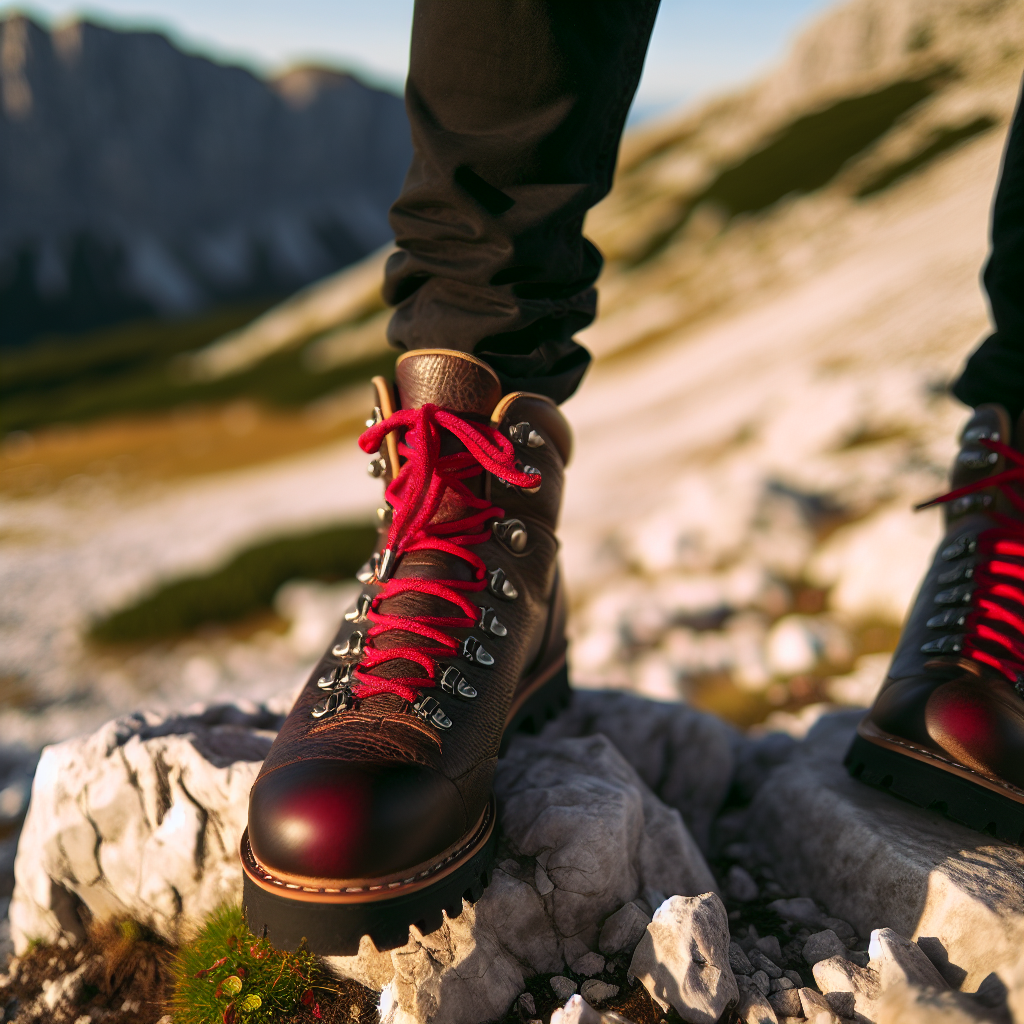
Hiking boots with red laces are more than a fashion statement—they’re a time-tested symbol of adventure, durability, and trail-readiness. Seen on rugged ridgelines and alpine passes across the globe, these iconic boots combine classic heritage with practical visibility, built for those who tackle tough terrain with purpose. From snowy scrambles to dusty switchbacks, hiking boots with red laces remain a trusted companion for outdoor purists who demand reliability and performance.
The Origin of Hiking Boots with Red Laces
This eye-catching boot style traces its roots back to the golden age of European mountaineering in the 1960s and 70s. Italian-crafted climbing boots—such as those by Danner, Scarpa, and Galibier—featured bright red laces for visibility in snow-covered environments. In alpine conditions, being able to quickly locate your boots could be a safety essential, particularly on glaciers or during whiteout scenarios where gear needed to stand out clearly.
As elite climbers like Reinhold Messner and American alpinists took to peaks like Denali and Mount Rainier, their gear choices gained recognition. Hiking boots with red laces—paired with full-grain leather uppers and Vibram soles—began to define rugged credibility among serious adventurers. Danner’s “Mountain Light” boot became a classic, and by the 1980s, red-laced hiking boots had become a symbol for both backcountry grit and traditional craftsmanship.
Why Choose Hiking Boots with Red Laces Today?
Modern hikers continue to choose hiking boots with red laces not just for style, but for their functional advantages. Red laces offer better visibility in low light and rough terrain, and their bold color resists showing dirt as quickly as lighter shades.
Beyond aesthetics, these boots often come equipped with premium features. The Danner Mountain Pass, for example, uses waterproof full-grain leather and dependable Vibram soles—ideal for varied terrain like Oregon’s Timberline Trail. On extended hikes where ankle support and durability matter, red-laced boots consistently outperform minimalist alternatives.
On challenging routes such as the Presidential Traverse in the White Mountains—where steep, rocky climbs span over 20 miles—full-support boots keep fatigue and injury at bay. For these environments, red laces aren’t just decorative; they symbolize intentional preparation for remote and rugged adventures.
Key Features to Look for in Hiking Boots with Red Laces
If you’re shopping for hiking boots with red laces, durability and comfort should guide your decision. Consider the terrain you plan to hike and prioritize gear that balances structure, support, and weather resistance.
- Upper Material: Choose full-grain leather for long-term toughness on scrambles and bushwhacks.
- Waterproofing: Boots lined with Gore-Tex or eVent will protect against stream crossings, snowbanks, and sudden downpours on high-altitude trails.
- Weight: Midweight boots (about 3 lbs/pair) offer versatility for multi-day trips without taxing your joints.
- Sole Type: Vibram Megagrip outsoles provide traction across scree, wet stone, and muddy paths.
- Ankle Support: High-cut collars offer critical stability on trails like Glen Pass along the John Muir Trail, where missteps can be costly.
Top-performing models include the Zamberlan Vioz GTX—crafted in Italy and equipped with factory red laces—and the Asolo Fugitive GTX, which easily pairs with aftermarket red laces for an instantly upgraded appearance and fit.
Where to Use Hiking Boots with Red Laces
Some trails practically demand the durability of hiking boots with red laces. Whether conquering technical climbs or navigating wet trail sections, these boots are designed to handle the extremes.
- Clouds Rest, Yosemite, CA: Tackle 3,000 feet of elevation across 14.5 miles, where slick granite requires precise traction and a supportive fit.
- Grinnell Glacier Trail, Glacier National Park, MT: Early-season snowfields and riverside trails test your boots’ waterproofing and grip.
- Teton Crest Trail, WY: Over 35 miles of alpine terrain call for excellent breathability and ankle support—hallmarks of well-built leather hiking boots.
Even on shorter trips through the Smokies’ Alum Cave Trail or Pennsylvania’s Appalachian Trail stretches, these boots provide unmatched stability and all-weather protection. Whether you’re facing mud, roots, or granite, hiking boots with red laces deliver consistency and confidence.
Lace-Up Strategy: Fit and Function Matter
Even the most rugged boots can lead to discomfort if not laced properly. The good news? The textured weave of red laces offers better hold and tension over long distances. Many red laces are longer and thicker by design, making them ideal for custom lacing techniques.
Try window lacing to reduce top-foot pressure or heel-lock lacing to stop ankle slippage on steep descents. These techniques can make a significant difference on aggressive trails like Angel’s Landing in Utah or Humphrey’s Peak in Arizona. Spend a few minutes at the trailhead dialing in your lacing to avoid hot spots and blisters—it’s a small step that enhances long-term trail comfort.
Preserving the Legacy of Red Laced Hiking Boots
Today’s resurgence of hiking boots with red laces nods to a legacy built on craftsmanship and reliability. More than just retro appeal, these boots remind us of gear built to last through years of rugged use. Many hikers share stories of boots that have been resoled, passed down, or restored after hundreds of trail miles.
If you’re reviving a vintage pair or upgrading a current favorite, high-quality replacement laces from makers like Rhino Laces, Red Lace Project, or Paracord Planet can refresh both function and style. Regular maintenance—like reapplying waterproof treatments and conditioning leather—keeps your boots ready for action. Aim to treat the leather every 6–8 trips and inspect the soles each season for wear or delamination.
Whether you’re preparing for your first multiday hike or embarking on your hundredth summit, hiking boots with red laces offer tradition, toughness, and trail-proven performance. They represent not just timeless design but a deeper connection to the spirit of exploration—every step of the way.